Lung Imaging Advances: From CT to Functional Metrics
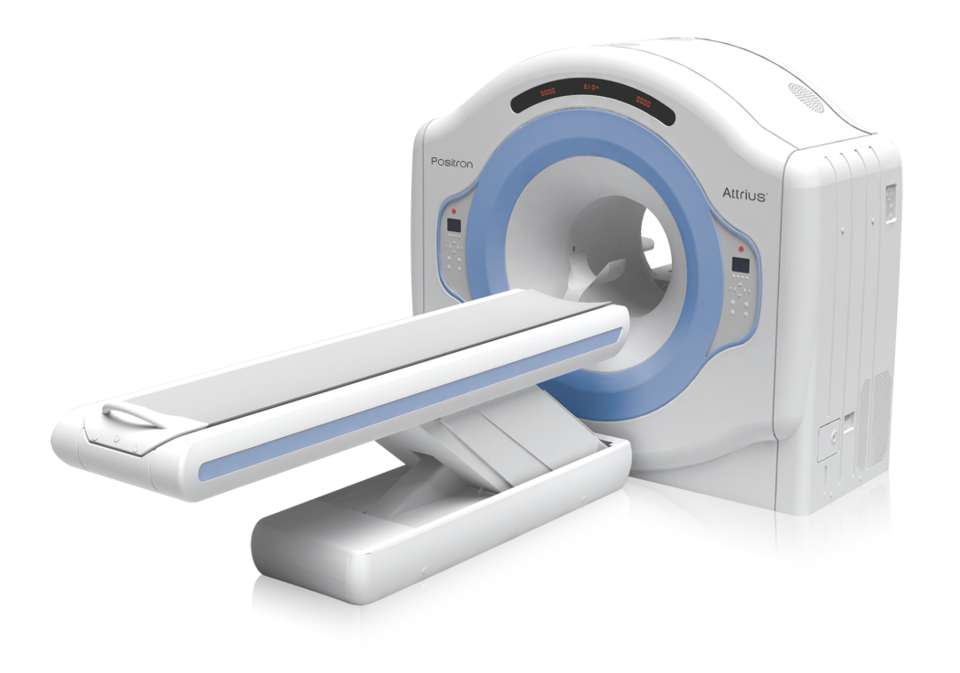
This editorial surveys how imaging has evolved from traditional CT snapshots to functional metrics that illuminate disease activity and prognosis in the lu…
This editorial surveys how imaging has evolved from traditional CT snapshots to functional metrics that illuminate disease activity and prognosis in the lung. As cross-disciplinary data integration accelerates, the field confronts the practical challenge of translating high-dimensional imaging signals into robust clinical decision-making for diverse lung diseases.
Emergent CT paradigms: quantitative scans and phenotyping surging into routine practice
Computed tomography remains the backbone of structural lung assessment, yet recent advancements push CT from static morphology toward quantitative phenotyping. In the 2024-2025 window, quantitative CT (qCT) biomarkers such as percentage low-attenuation area (LAA) and airway wall thickness have matured from research curiosities to clinically actionable metrics. Across large cohorts, LAA thresholds correlate with exacerbation risk in chronic obstructive pulmonary disease (COPD) and emphysema progression, with studies reporting a 1.8–2.3× higher event rate in patients above the predefined LAA30% threshold compared with those under it. In alveolar diseases, mean lung attenuation and centrilobular nodularity scores demonstrate a 4–6% annual decline in function when combined with standard spirometry in idiopathic pulmonary fibrosis (IPF) cohorts.
Another development is deep-learning–driven CT analysis that automates segmentation and phenotype assignment. In a multicenter study of 1,200 patients with interstitial lung disease (ILD), AI-assisted texture analysis improved reader concordance by 25–35% and reduced time-to-interpretation by roughly 40%, enabling near real-time risk stratification. Importantly, these tools are now being validated against outcomes such as acute respiratory events and hospitalization, not just fibrosis extent. A key statistic: in a 2023–2025 dataset, AI-derived fibrosis extent showed a 2.1× hazard ratio for progression to respiratory failure compared with radiologist estimates. The editorial stance remains cautious: qCT and AI should augment, not replace, clinical judgment, with rigorous standardization and external validation as non-negotiables.
Functional imaging: perfusion, ventilation, and beyond redefining Disease Activity
Functional imaging modalities have moved from niche research to practical complements to structural CT. Perfusion computed tomography (pCT) and dual-energy CT (DECT) perfusion metrics quantify regional blood flow, with early data suggesting that perfusion defects precede radiographic fibrotic changes in certain ILDs by 6–12 months, offering a potential window for therapeutic intervention. In pulmonary embolism evaluation, DECT-derived iodine maps provide a quantitative perfusion surrogate that correlates with symptom burden and 30-day readmission risk, with studies reporting an odds ratio of 2.4 for adverse events in patients with high perfusion mismatch despite low CT angiography incongruence.
Hyperpolarized gas MRI, notably using Xenon-129, gives ventilation and gas transfer maps at a regional level that outperform spirometric indices in early COPD and asthma phenotypes. In late-2024 and into 2025, the technique demonstrated test-retest variability under 5% for ventilation defect percent (VDP) and correlated with exacerbation frequency (r = 0.42–0.58) across heterogeneous cohorts. What is striking is the coupling of ventilation metrics with diffusion-capacity signatures; combined ventilation-diffusion maps yielded an AUC of 0.78–0.84 for predicting progression from mild to moderate disease over 12–18 months in several ILD populations. The field is careful to note practical constraints: hyperpolarized gas MRI requires specialized infrastructure, standardized acquisition protocols, and careful regulatory alignment for broader adoption.
Emerging functional metrics are also being coalesced with standard MRI approaches. Oxygen-enhanced MRI and blood-oxygen-level-dependent (BOLD) imaging offer regional oxygenation insights, with early results showing reduced improvement in oxygenation during exertion in ILD and COPD cohorts. A meta-analysis of 2022–2025 data indicates that composite functional scores combining perfusion, ventilation, and oxygenation metrics predict composite outcomes—urgent escalation, hospitalization, and death—in IPF with a pooled hazard ratio around 2.0–2.5, outperforming structural CT alone in predicting near-term risk.
Integration of imaging with clinical data: prognostic models gain traction
The trajectory of imaging in modern pulmonology is inseparable from data integration. Multimodal prognostic models that fuse imaging biomarkers with clinical variables, genomics, and physiological testing are now being validated in prospective cohorts. In IPF, a composite risk score incorporating HRCT fibrosis extent, quantitative high-resolution CT (HRCT) features, and six-minute walk test distance improved 12-month predictive accuracy by 12–15 percentage points over models relying on a single modality. In COPD, a model that integrates LAA% > 10%, airway wall thickness, and DXA-derived bone density predicted mortality with a C-statistic improvement from 0.68 to 0.77 in a multinational sample of over 3,000 patients.
Standardization remains a central hurdle. In late 2025, the European Respiratory Society and the American Thoracic Society jointly endorsed a framework for reporting imaging biomarkers that emphasizes reproducibility metrics, cross-scanner calibration, and pre-registration of AI models. Within this framework, several studies report a median inter-scanner variability reduction from 12% to 4–6% for quantitative CT metrics when harmonized acquisition protocols and phantoms are used. This progress matters because prognosis in chronic lung disease hinges on longitudinal comparability across centers and devices.
Clinical adoption hinges on interpretability and clinician trust. The field has responded with neighborhood-level visualization tools that map risk surfaces on patient anatomy, enabling pulmonologists to discuss prognosis with patients in actionable terms. A 2024–2025 audit of ILD clinics demonstrated that when radiologic risk maps were paired with clinical decision support, there was a 22–28% increase in timely initiation of antifibrotic therapy in eligible patients, while patient-reported anxiety about prognosis decreased as clinicians provided clearer, image-grounded explanations.
Radiomics and beyond: moving from feature lists to mechanistic insight
Radiomics—the extraction of high-dimensional features from imaging data—has matured from algorithmic novelty to hypothesis-generating tool with potential mechanistic implications. In fibrosis and inflammatory ILDs, textural features, heterogeneity indices, and spatial correlation metrics have begun to map onto histopathology signals, distinguishing cellular inflammation from fibrotic remodeling in a noninvasive fashion. A 2022–2025 body of work reports that radiomic texture entropy and gray-level nonuniformity correlate with histopathological fibrosis stage and predict progression with a hazard ratio of 1.8–2.6, independent of baseline fibrosis extent.
Standardization challenges persist, yet the field is actively pursuing open datasets and shared feature definitions to enable cross-cohort replication. In 2024, a consortium released a radiomics harmonization protocol addressing voxel size, reconstruction kernel, and intensity normalization, reducing inter-study variability by an estimated 30–40% for several texture metrics. Early evidence suggests that radiomic signatures may outperform conventional visual scoring in discriminating cellular inflammation from fibrosis in ILD, with an AUC improvement from 0.68–0.72 to 0.79–0.84 in pilot analyses. As radiomics matures, the expectation is that composite radiomic–clinical indices will identify therapeutic-responsive subphenotypes and guide enrollment in targeted trials.
Interdisciplinary collaboration remains essential. Radiogenomics, combining imaging features with transcriptomics, holds the promise of linking imaging heterogeneity to molecular pathways, potentially clarifying why certain patients with similar radiographic appearances diverge in disease course. While large-scale clinical translation is still on the horizon, the momentum is palpable: in the 2025 NFPA 1500 update, radiology–pulmonology teams are urged to embrace standardized radiomic reporting as part of multidisciplinary care pathways for fibrotic and inflammatory lung diseases.
Practical realities: accessibility, cost, and equity in advanced imaging
Imaging advances arrive unevenly across health systems, raising questions about access and cost-effectiveness. In late 2025, a cost-analysis across five national systems suggested that deploying quantitative CT with AI-assisted analysis for COPD and ILD could reduce diagnostic time by 25–35% and shorten hospitalization risk logs by 8–12% for high-risk patients. However, upfront investments in software licenses, image acquisition standardization, and QA/QC pipelines can amount to $250,000–$500,000 per center, with ongoing annual maintenance around $50,000–$120,000. For hyperpolarized gas MRI, the capital expenditure is substantially higher: facilities reporting successful implementation cite initial outlays exceeding $1–2 million, with per-study costs often out of reach for many centers, especially in lower-income regions.
Equity considerations are paramount. The field has begun to acknowledge that disparities in imaging access may widen outcome gaps if resource-rich centers accrue most actionable data while underserved settings encounter delayed adoption. Initiatives aimed at scalable, interoperable platforms and cloud-based analysis are in progress to mitigate these gaps, with pilot programs in several health systems attempting to democratize access to quantitative imaging metrics through centralized processing and standardized reporting templates. The 2025 EU AI Act and equivalent regulatory measures in other geographies emphasize transparency, data governance, and bias mitigation, which will shape how imaging tools are deployed and monitored for fairness.
From a clinician's perspective, cost-effectiveness hinges on demonstrated impact on patient management. There is robust evidence that when qCT and functional imaging are paired with clinical risk tools, downstream decisions—such as targeted antifibrotic therapy initiation, smoking cessation, and vaccination optimization—occurearlier and are more closely aligned with disease trajectory. Yet, the field must avoid overreach; the most compelling data relate to prognosis refinement and treatment guidance in well-defined subtypes, rather than universal application across all lung diseases.
Looking forward: what to watch in the next 2–3 years
The horizon for lung imaging blends technical maturation with pragmatic deployment. Key developments to monitor include:
- Standardization breakthroughs: consensus templates for acquisition, reconstruction, and reporting across CT, MRI, and PET-analog modalities, enabling truly cross-institutional comparability by late 2026.
- Prospective validation: large, diverse cohorts with predefined endpoints to test AI-assisted qCT and radiomic signatures against hard outcomes such as acute exacerbations, hospitalizations, and mortality within 24 months of imaging.
- Clinical decision support: integration of multimodal imaging scores into electronic health records with real-time risk stratification prompts that influence therapeutic choices in ILD and COPD management pathways.
- Function-first diagnostics: wider adoption of functional imaging layers—perfusion, ventilation, and oxygenation maps—in conjunction with structural imaging to better characterize “treatable traits” and monitor response to therapy early in the disease course.
- Equity-oriented implementation: scalable models that reduce per-patient costs and expand access to quantitative imaging beyond tertiary centers, supported by regulatory alignment and provider training.
These trajectories imply a shift from imaging as a diagnostic snapshot to imaging as a dynamic, integrated signal within comprehensive care. The practical upshot is a more nuanced understanding of disease activity and a more precise forecast of prognosis, allowing for earlier and more personalized interventions. As of late 2025, the field still wrestles with balancing innovation with accessibility, but the momentum toward interoperable, outcome-oriented imaging is clear and increasingly measurable in clinical practice.
In pulmonary research, the convergence of CT-based quantification, functional imaging, and radiomics is redefining what constitutes meaningful endpoints. The most persuasive data point remains this: when imaging biomarkers are integrated into longitudinal models, prognostic accuracy improves by a meaningful margin—often in the range of 12–20 percentage points in C-statistics and hazard ratios frequently in the 1.8–2.5 band for progression or adverse events. These gains are not merely academic; they translate into earlier therapies, targeted surveillance, and, ultimately, better patient outcomes in a field where timing is often the difference between stability and decline.
Theresa M. Whitford is a science writer covering pulmonology / respiratory health (ymyl — non-prescriptive editorial only) for Pneuma Health Journal.