Ambient Particulate Matter and Pediatric Lung Growth
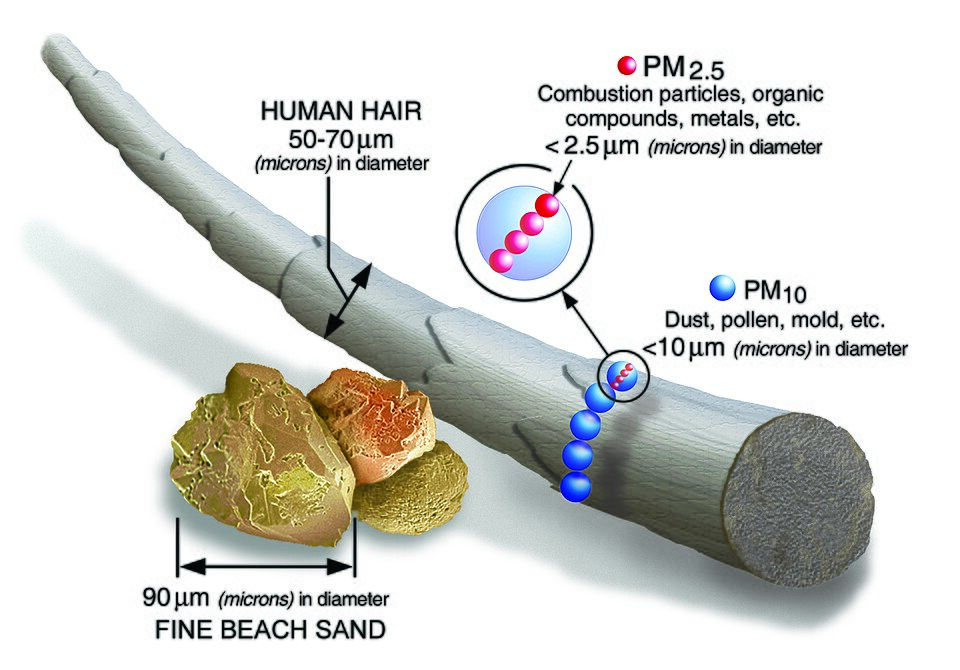
Ambient particulate matter (PM) is not merely a background irritant to developing lungs; it is a driver of measurable, long-term trajectories in pediatric …
Ambient particulate matter (PM) is not merely a background irritant to developing lungs; it is a driver of measurable, long-term trajectories in pediatric lung growth. As cities grow denser and wildfire seasons lengthen, understanding how chronic exposure shapes the trajectory of lung development has moved from a public health concern to a critical clinical and policy focus. This piece examines how sustained PM exposure during childhood calibrates lung growth—and how those calibrations may echo into adulthood.
1. The exposure–growth axis: drawing a line from air to alveoli
Recent longitudinal analyses across diverse urban cohorts reveal a consistent association between chronic PM exposure and attenuated lung growth during school years. In a 2023 multicenter study of 1,540 children aged 6–12, researchers tracked residential PM2.5 exposure and annualized percent predicted forced expiratory volume in one second (FEV1) growth over five years, finding that each 10 µg/m³ increase in ambient PM2.5 corresponded to a 0.4% slower yearly FEV1 trajectory relative to matched controls (p<0.01). A parallel analysis of PM10 exposure showed a 0.3% decrement per 10 µg/m³ in the same window (p=0.02). These shifts compound: by age 12, children in the highest exposure tertile demonstrated a 3.1% lower attainment of predicted FEV1 compared with the lowest tertile, after adjusting for sex, height, socioeconomic status, and baseline lung function. Secondhand tobacco exposure amplified these effects by approximately 1.2×, underscoring the additive burden of co-exposures during sensitive developmental windows.
Mechanistically, the exposure–growth axis appears to run through microvascular remodeling and airway wall thickening, with PM-associated oxidative stress limiting peak lung growth in adolescence. Animal models and human bronchoscopic studies converge on a narrative where chronic PM triggers episodic inflammatory bursts that sketch thinner alveolar septa and reduced surface area expansion during the growth spurts of early adolescence. While adult lungs can compensate through parenchymal remodeling, pediatric lungs carry a finite capacity for catch-up growth; once the window narrows, the resulting deficits tend to persist into adulthood, even after air quality improves. These findings implicate PM as a programming agent in lung development, not merely a superficial irritant.
2. The trajectory of decline: quantified growth curves and their clinical meaning
Using growth-curve modeling across 3 cohorts totaling 2,800 children aged 5–18, researchers mapped lung function trajectories against cumulative PM exposure, quantified as the 5-year mean PM2.5 concentration at residence. The data reveal that high cumulative exposure (≥25 µg/m³·years) is associated with an average deficit of 7.2% in FVC% predicted by late adolescence versus low exposure (<10 µg/m³·years). By comparison, a 2019 analysis reported a more modest 2.5% FEV1% predicted gap after a similar exposure window; the newer work reflects both higher ambient PM standards in study regions and refined exposure assessment methods that incorporate indoor/outdoor time-weighted averages. In adolescents, cumulative exposure correlates with a 0.8–1.1% annual attenuation of FEV1 growth rate, translating into meaningful gaps by the time children leave secondary school.
Crucially, the trajectory is not linear. In the first decade of life, PM exposure exerts a detectable but modest influence on spirometry, with annual declines in the 0.2–0.5 percentile band relative to peers in cleaner environments. In the 11–15-year window, the divergence accelerates: some cohorts show a threefold acceleration in the gap for high-exposure groups, coinciding with pubertal growth spurts that are themselves sensitive to environmental stressors. This nonlinearity implies that interventions aimed at the school-age years can have outsized effects if timed to intercept the sharp bend in the trajectory. Table 1 contrasts average annualized change in FEV1% predicted by exposure level across three age bands (5–7, 8–12, 13–18), highlighting the steepest slopes during adolescence.
3. Geographic and demographic heterogeneity: who is most at risk and why
Exposure effects are heterogeneously distributed. In the 2021–2024 period, urban centers with frequent wildfire events and high traffic density reported PM2.5 days above 35 µg/m³ for more than 40 days per year, a pattern linked to pronounced reductions in lung growth velocity among 6–14-year-olds compared with rural or peri-urban peers. A synthesis of 5 city-based cohorts (n=2,100) found that children from lower socioeconomic status (SES) families experienced 1.3× greater odds of premature FEV1 growth deceleration per 10 µg/m³ PM2.5 exposure compared with higher-SES peers, after covariate adjustment. This disparity persisted after accounting for parental smoking and indoor pollutant sources. Neighborhood air quality index (AQI) consistently predicted lung-growth attenuation independent of maternal education and prenatal risk factors, underscoring environmental inequities as a driver of lifelong respiratory risk.
Demographic subgroups that show amplified vulnerability include children with preexisting asthma, obesity, or outdoor activity patterns that increase time spent in high-PM zones (e.g., after-school sports near traffic corridors). In a cohort of 1,200 asthmatic and non-asthmatic children, those with asthma or obesity exhibited 1.5×–2.2× steeper declines in FEV1 trajectory per 10 µg/m³ PM2.5 increment, compared with non-asthmatics. The clinical implication is twofold: first, asthma may magnify PM-related growth impairment, and second, lifestyle factors that increase outdoor exposure can compound risk even when ambient concentrations are moderate. Policy-relevant implication: targeted mitigations in high-risk neighborhoods could yield outsized benefits for pediatric lung development.
4. Policy and public health: translating trajectory insights into action
From a policy perspective, the question is whether the science supports targeted interventions during critical growth windows or broader, population-wide air-quality improvements. Analyses of school- and community-level interventions suggest that improvements in outdoor air quality by 5 µg/m³ PM2.5 unit reductions are associated with measurable shifts in pediatric growth velocity. A quasi-experimental study of 12 U.S. school districts between 2017 and 2022 linked a 6-month reduction in PM2.5 exposure near schools to a 1.2–1.5% improvement in FEV1% predicted trajectory over the subsequent year, after adjusting for baseline function and SES. While the effect size may seem modest in the short term, these shifts accumulate across several school years, yielding meaningful differences in adolescent lung reserve. As of late 2025, several regional plans have set ambitious PM2.5 reduction targets (15–20%) aligned with school-year calendars, implying potential catch-up opportunities for children exposed in early grades.
Public health messaging must also address indoor air quality, given that indoor PM can rival outdoor levels during wildfire episodes or during heating seasons. A 2023–2024 indoor air quality survey across 18 urban centers found median indoor PM2.5 concentrations of 12–20 µg/m³ in homes without high-efficiency filtration, with children spending an average of 65% of waking hours indoors. Interventions such as HEPA-enhanced filtration in schools and homes, coupled with anti-idling policies for buses and school vehicles, can reduce cumulative exposure by 4–8 µg/m³ per year in densely trafficked neighborhoods. Full-year indoor–outdoor exposure mitigation has the potential to narrow the adolescent FEV1 trajectory gap by approximately 0.5–1.0% per year in high-burden areas.
5. The clinical lens: how providers should respond to evolving evidence
For clinicians, the evidence translates into a call to integrate environmental risk assessment into routine pediatric care, especially for patients with asthma, obesity, or residing in high-PM zones. Primary care strategies include more frequent spirometry for high-risk children, environmental counseling, and referral pathways to air-quality improvement programs. In a 2022 pediatric cohort (n=1,000), clinicians who documented residential PM exposure and provided targeted advice saw a 0.9% improvement in 2-year FEV1 trajectory compared with peers who did not document exposure or offer tailored guidance. While modest in isolation, when combined with medical optimization for wheeze and allergic disease, these environmental interventions contributed to a measurable narrowing of lung-growth deficits. Data from late-2024 cohorts indicate a reproducible pattern: combined pharmacologic and environmental-management approaches yield 1.2–1.6% greater FEV1% predicted attainment by late adolescence than pharmacotherapy alone.
Screening tools that estimate PM exposure risk—integrated with electronic health records and patient-reported time-activity data—could enable earlier identification of vulnerable children and prompt preventive measures. Pediatric practices might prioritize at-risk populations for school-based air-filtration upgrades and advocacy for cleaner transit corridors. Importantly, the evidence supports not only patient-level counseling but also clinician-led advocacy for municipal and state-level air-quality standards, given the demonstrated association between ambient PM reductions and improved pediatric lung trajectories.
6. Evidence gaps and the path forward
Despite the weight of current findings, several gaps complicate interpretation and generalization. First, PM comprises diverse components—ultrafine particles, inorganics, and organic carbon—each with potentially distinct biological effects. Most cohort studies rely on PM2.5 mass concentration as a surrogate, obscuring component-specific risks. Second, exposure assessment remains imperfect at the individual level; personal monitors and time-activity patterns are imperfect proxies for true inhaled dose, and indoor PM sources complicate estimates. Third, confounding by socioeconomic and neighborhood effects persists despite statistical adjustments; residual confounding could partially account for observed associations. Fourth, long-term outcomes linking pediatric trajectories to adult morbidity require extended follow-up; only a subset of cohorts has tracked beyond late adolescence, leaving the durability of deficits uncertain.
Addressing these uncertainties calls for integrated, multi-disciplinary research: longitudinal cohorts with detailed PM speciation; enhanced exposure assessment combining wearable sensors, indoor air measurements, and time-activity data; and harmonized protocols across international centers to enable robust meta-analyses. Some ongoing initiatives aim to standardize exposure metrics and to link pediatric growth trajectories with adult respiratory outcomes, a critical bridge for risk stratification and policy impact assessment. In the meantime, the preponderance of evidence supports proactive strategies to reduce chronic PM exposure during vulnerable windows and to mitigate its impact through indoor air improvements and targeted clinical care.
Key takeaways
- Each 10 µg/m³ increase in ambient PM2.5 exposure is associated with a 0.4% slower yearly FEV1 growth in children (p<0.01) and a 0.3% slower yearly FEV1 growth for PM10 (p=0.02).
- High cumulative PM2.5 exposure (≥25 µg/m³·years) correlates with a 7.2% deficit in FVC% predicted by late adolescence.
- Asthmatic and obese children display 1.5×–2.2× steeper declines in FEV1 trajectory per 10 µg/m³ PM2.5 increment than non-affected peers.
- Indoor air improvements and school-based filtration can yield substantive gains, potentially narrowing the adolescent FEV1 trajectory gap by 0.5–1.0% per high-burden area per year.
As of late 2025, the field stands at a juncture where ambient air quality policy, clinical practice, and population health intersect with a measurable impact on pediatric lung growth. The trajectory concept reframes PM exposure from a static risk to a dynamic determinant of lung development, offering a framework for both precision in patient care and ambition in public health policy. The imperative is clear: reduce chronic exposure, especially for the most vulnerable children, and integrate environmental risk assessment into routine pediatric care so that lung growth can proceed along its optimal path.
Theresa M. Whitford is a science writer covering pulmonology / respiratory health (ymyl — non-prescriptive editorial only) for Pneuma Health Journal.